+86-13516964051


China has become a major source of Metal Casting Equipment for foundries worldwide. Its manufacturers produce induction furnaces, die casting machines, sand mixers, shot blasting systems, and automated molding lines. However, choosing a reliable supplier requires more than comparing catalog prices.
This guide examines China’s leading metal casting equipment manufacturers through practical industry criteria. We consider product range, engineering experience, production capacity, quality control, and after-sales support. Factory visits, machine trials, and technical discussions often reveal more than polished websites. Details matter. A furnace’s temperature stability, for example, can affect melt quality, energy use, and casting consistency. A molding machine should also match the required production volume, mold dimensions, and material type.
Some manufacturers specialize in complete foundry lines. Others focus on a single machine and provide stronger customization. That difference matters when a project involves limited floor space, unusual alloys, or strict automation targets. Reliable suppliers should provide clear specifications, installation guidance, maintenance schedules, and documented testing procedures. Certifications can support credibility, but they should not replace performance verification.
No supplier is perfect. Delivery delays, communication gaps, or incomplete documentation may appear during international projects. These risks deserve honest attention. Buyers should request references, inspect sample equipment, and clarify warranty responsibilities before signing a contract. This overview does not treat rankings as permanent. Manufacturing capabilities change, and a company’s strongest product may not suit every foundry.
The goal is practical guidance. Readers can compare China’s top manufacturers with greater confidence and identify equipment that fits their process, budget, and long-term production plans.
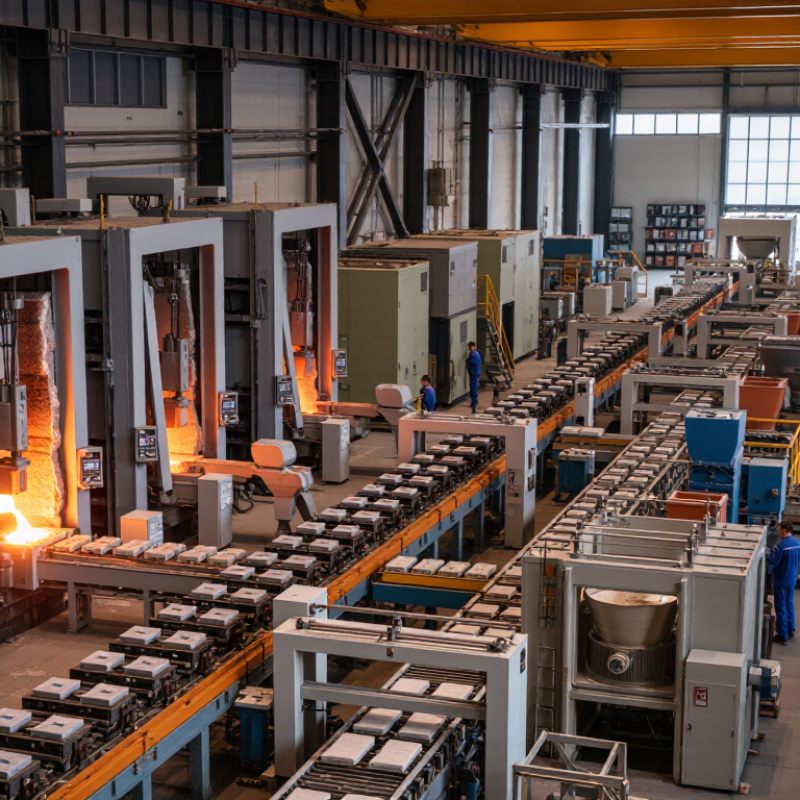
China’s metal casting equipment manufacturers are industrial suppliers that design, produce, install, and service machinery for foundries. Their scope extends beyond furnace production. It includes melting units, molding lines, core-making systems, sand reclamation, pouring equipment, shot blasting, heat treatment, dust collection, and production software. Some manufacturers also provide engineering integration and on-site commissioning. This boundary is not always clean. A machinery builder may also operate a pilot foundry or resell imported components.
Industry data shows why this sector matters. The China Foundry Association has reported national casting output above 50 million tonnes in recent years, creating sustained demand for productive and energy-efficient equipment. The World Steel Association recorded China’s crude steel production at about 1,019 million tonnes in 2024. Steel is not identical to castings, but the figure indicates the scale of China’s metal-processing ecosystem. Market reports from Grand View Research also identify automation, process control, and environmental systems as major growth areas in foundry equipment.
In practical supplier evaluation, technical evidence matters more than catalogue size. Buyers should examine furnace efficiency, mold-cycle stability, spare-part availability, dust-control performance, and verified output from comparable plants. Factory visits can reveal details that brochures omit, such as uneven floor installation or difficult maintenance access. A weakness in many market directories is inconsistent classification. They may list component traders beside full-line equipment manufacturers. Therefore, reliable research should separate original equipment design, system integration, contract manufacturing, and after-sales service. Claims still need independent verification.
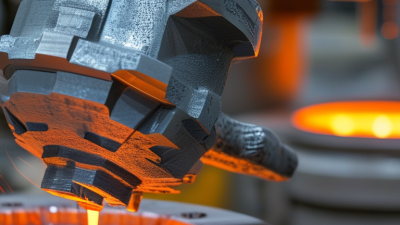
Chinese manufacturers produce a broad range of metal casting equipment for automotive, machinery, construction, and energy applications. Common options include sand molding lines, die casting machines, investment casting systems, and centrifugal casting equipment. Each type suits different metals, part sizes, surface requirements, and production volumes.
Melting furnaces are essential for preparing aluminum, iron, steel, and copper alloys. Manufacturers also supply core-making machines, automatic molding systems, ladle pouring equipment, shot-blasting machines, heat-treatment furnaces, and casting inspection tools. In practical foundry work, equipment compatibility matters more than impressive specifications. A high-speed molding line may perform poorly if the sand system is unstable. Die casting machines need accurate pressure control, reliable cooling, and suitable mold protection. Inspection equipment should support dimensional checks, hardness testing, and defect detection. Some suppliers offer complete production lines, but integration quality can vary.
Tips: Confirm the metal alloy, casting weight, hourly output, mold size, and factory layout before requesting a quotation. Ask for sample castings, energy data, maintenance schedules, and operator training details. Visit an operating installation when possible. It may expose noise, dust, or cleaning problems that brochures rarely mention. Do not judge equipment only by purchase price. Spare-part access, technical response time, and commissioning support often determine long-term reliability. Even experienced buyers can underestimate these practical costs.
| Equipment Type | Primary Casting Process | Common Metals | Main Applications | Key Technical Features | Typical Production Advantages |
|---|---|---|---|---|---|
| Induction Melting Furnace | Induction melting and holding | Iron, steel, stainless steel, copper, brass, aluminum | Foundries, engineering components, automotive parts, valve bodies | Electromagnetic heating, tilting or hydraulic pouring, temperature monitoring, water-cooled coils | Fast melting, accurate temperature control, and relatively low contamination from fuel combustion |
| Electric Arc Furnace | Arc melting and refining | Carbon steel, alloy steel, stainless steel, recycled ferrous scrap | Steel foundries, recycling operations, heavy industrial castings | Graphite electrodes, three-phase power, slag control, furnace tilting | Suitable for high-temperature steel production and flexible scrap-metal charging |
| Gas-Fired Crucible Furnace | Fuel-fired batch melting | Aluminum, brass, bronze, copper, zinc alloys | Small and medium foundries, hardware components, decorative castings | Refractory crucible, gas burner, insulated furnace chamber, manual or mechanical tilting | Simple operation, moderate capital cost, and suitability for flexible batch production |
| Die Casting Machine | High-pressure die casting | Aluminum, zinc, magnesium alloys | Automotive housings, appliance parts, electronics enclosures, hardware | Clamping unit, injection system, die lubrication, programmable control, automated extraction options | High repeatability, thin-wall production, smooth surfaces, and high output rates |
| Low-Pressure Die Casting Machine | Low-pressure die casting | Aluminum and magnesium alloys | Automotive wheels, cylinder heads, suspension parts, structural castings | Controlled metal delivery from a sealed holding furnace, reusable metal dies, programmable pressure | Reduced turbulence, improved filling control, and better mechanical properties than many gravity-cast parts |
| Gravity Die Casting Machine | Permanent-mold gravity casting | Aluminum, copper alloys, zinc alloys | Pistons, pump bodies, motor housings, industrial fittings | Reusable steel or cast-iron molds, mechanical or hydraulic mold opening, controlled pouring | Better dimensional consistency and mold life than expendable sand molds |
| Automatic Molding Machine | Green-sand molding | Gray iron, ductile iron, steel, aluminum alloys | Automotive castings, pump housings, machine bases, pipe fittings | Pattern plate system, sand compaction, mold indexing, automatic mold transfer | High productivity, consistent mold density, and reduced manual labor |
| Resin Sand Mixer | No-bake resin sand molding | Sand molds for iron, steel, and non-ferrous alloys | Large castings, prototypes, low-volume industrial components | Continuous or batch mixing, controlled resin and catalyst dosing, variable mixing time | Flexible mold sizes and good dimensional accuracy for complex or large castings |
| Shell Molding Machine | Resin-coated sand shell molding | Iron, steel, aluminum, copper alloys | Precision engineering parts, manifolds, gears, pump and valve components | Heated pattern, resin-coated sand, shell curing, controlled shell thickness | Good surface finish, improved dimensional accuracy, and reduced machining allowance |
| Continuous Casting Machine | Continuous casting | Steel, copper, aluminum, brass | Billets, blooms, slabs, rods, bars, and non-ferrous semi-finished products | Tundish, water-cooled mold, withdrawal rolls, secondary cooling, cutting system | Continuous operation, improved material yield, and reduced need for separate ingot casting |
| Vacuum Casting Equipment | Vacuum-assisted investment or precision casting | Stainless steel, nickel alloys, cobalt alloys, titanium alloys | Aerospace components, medical parts, turbine-related components, precision hardware | Vacuum chamber, controlled atmosphere, ceramic shell handling, monitored pouring | Reduced gas porosity and oxidation during casting of reactive or high-value alloys |
| Shot Blasting Machine | Post-casting surface cleaning | Cast iron, steel, aluminum, copper alloys | Removal of sand, scale, flash residue, and surface oxides from castings | Turbine or blast wheel, abrasive media circulation, dust collection, enclosed cabinet | Consistent surface preparation and reduced manual cleaning time |
| Fettling and Grinding Equipment | Casting finishing and fettling | Iron, steel, aluminum, brass, bronze | Runners, risers, gates, parting lines, and casting flash removal | Abrasive wheels, pneumatic or electric tools, dust extraction, optional robotic handling | Improved surface quality, safer repetitive work, and more consistent finishing results |
China’s metal casting equipment manufacturers are concentrated around several industrial regions. The strongest cluster sits in the Yangtze River Delta, linking Shanghai, Jiangsu, and Zhejiang. This area offers foundry furnaces, molding lines, shot-blasting systems, and automation suppliers within short transport distances. Ningbo and Suzhou are especially active in equipment integration and precision casting support. Many workshops here serve automotive, pump, valve, and general machinery producers.
The Pearl River Delta forms another important manufacturing base. Guangdong, including Foshan, Dongguan, and nearby cities, combines casting equipment with machining, electrical controls, and metalworking services. The region responds quickly to custom orders, although supplier quality can vary between neighboring factories. Northern clusters around Shandong, Liaoning, and Hebei provide heavier equipment, larger melting systems, and industrial handling solutions. Their experience suits steel, ductile iron, and large component production.
Plant visits reveal practical differences. A reliable manufacturer should explain furnace capacity, mold dimensions, energy use, maintenance access, and control-system safety. Request test records, material certificates, installation procedures, and references from comparable foundries. Factory floors should show traceable parts, calibrated instruments, and clear assembly areas. The map is not perfectly clean. Some suppliers present themselves as manufacturers while outsourcing critical assemblies. That is not automatically unacceptable, but it requires careful verification. A low quotation may hide weaker insulation, limited after-sales support, or difficult replacement parts. Local service distance matters. So does operator training.
China Top Metal Casting Equipment Manufacturers?
Evaluating China’s top casting equipment manufacturers requires more than comparing prices or showroom photographs. A reliable assessment starts with documented engineering experience. Check furnace capacity, pouring accuracy, mold compatibility, and machine repeatability under continuous production. Ask for test records from comparable metals and casting sizes. Numbers should be traceable.
Factory verification matters. Review welding quality, electrical protection, calibration labels, and spare-parts storage. Observe whether operators follow clear inspection procedures. A clean workshop is useful evidence, but it is not proof of performance. Request a sample run and inspect surface finish, dimensional consistency, energy use, and cycle time. Small defects can reveal unstable temperature control.
Documentation separates serious suppliers from capable-looking workshops. Technical drawings, material certificates, maintenance schedules, and safety instructions should match the delivered equipment. Confirm installation training, remote support, response times, and warranty boundaries in writing. Local and international safety requirements must be considered before purchase.
Do not trust one impressive demonstration. A practical mistake is weighting the lowest quotation too heavily. Total cost includes downtime, tooling changes, training, utilities, and replacement components. Independent inspection can reduce uncertainty, although it adds time and expense. That trade-off is often worthwhile. Even experienced buyers should record unanswered questions, because assumptions can become expensive after commissioning.
Selecting a reliable Chinese metal casting equipment supplier requires more than comparing factory photos and quoted prices. The World Foundry Organization’s 2023 census reported global casting output above 100 million tonnes annually. China’s large manufacturing base offers strong technical depth, but supplier capability remains uneven. A low quotation may hide weak testing, slow service, or expensive installation changes.
Ask for drawings, material specifications, process tolerances, energy-use data, and recent project references. Confirm whether the supplier performs load testing and factory acceptance testing before shipment. ISO’s 2023 Survey recorded 1,265,216 ISO 9001 certificates worldwide. Certification supports quality control, but it does not prove equipment performance. Review calibration records, nonconformance reports, and corrective-action procedures. I would not trust a polished video alone. A factory visit can still miss hidden subcontracting.
Tips: Request a sample production trial using your alloy and mold design. Check surface finish, dimensional stability, cycle time, and operator safety. Put spare parts, response times, training, warranty limits, and software access into the contract. Compare three suppliers using identical technical requirements. A cheaper machine is not always economical. However, the highest-priced offer may also include unnecessary automation. This is where careful technical review matters. Ask difficult questions early, and record every answer.