+86-13516964051


Choosing the best Metal Casting Equipment in 2026 requires more than comparing purchase prices. Foundries now assess energy use, uptime, automation, maintenance access, and casting consistency. The World Foundry Organization’s 2023 Census of World Casting Production reported global output above 100 million tonnes, showing the scale and competitive pressure facing manufacturers. However, production volume alone does not prove equipment quality.
John Campbell, a leading casting researcher and author of Complete Casting Handbook, wrote, “The quality of a casting is determined by the quality of the liquid metal.” That principle still matters beside modern sensors and robotics. A furnace with unstable temperature control can create porosity, inclusions, and costly rework. Small errors become expensive quickly. The International Energy Agency also identifies industry as a major source of global energy demand, making efficient melting systems increasingly important for operating costs and emissions management.
A careful selection process should match equipment capabilities with alloy type, batch size, mold technology, and workforce skills. Buyers should request verified data for thermal efficiency, cycle time, scrap rates, and service response. Digital monitoring may improve visibility, but it cannot replace experienced operators. That part is often underestimated. Some reports also rely on supplier surveys, so their projections deserve scrutiny. The strongest decision combines technical trials, lifecycle costing, operator feedback, and independent performance evidence. In 2026, the best equipment may not be the newest. It should be the most reliable fit for the foundry’s real production conditions.
Before choosing metal casting equipment in 2026, define the work it must perform. Identify the alloy, part dimensions, wall thickness, surface finish, and required tolerances. Record your expected monthly volume, batch size, and acceptable scrap rate. A small workshop may need flexible melting capacity, while continuous production demands stable cycle times and automated material handling. Be specific. “High output” is not a measurable requirement.
Your production goals should also include energy use, labor availability, maintenance skills, and future product changes. Check furnace temperature control, mold compatibility, ventilation, cooling performance, and inspection access. Ask suppliers for verified test data, service records, and clear operating limits. In practical evaluations, I measure heat-up time, temperature stability, pour consistency, and cleaning effort under normal workloads. A machine that performs well for one alloy may struggle with another. My early mistake was focusing on maximum capacity instead of daily utilization. The oversized system consumed more energy and sat idle too often. That experience still shapes my equipment reviews. Leave room for growth, but do not pay for unused capacity. Also examine operator safety features, training requirements, spare-part availability, and documented compliance with local regulations. Small details matter. A difficult control panel can slow an entire shift. A thoughtful requirement sheet turns equipment selection from guesswork into a defensible production decision.

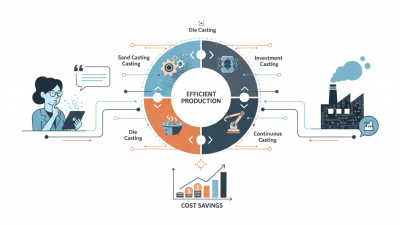
Metal casting equipment should match the part, alloy, volume, and tolerance. Sand molding suits large, complex parts and lower tooling costs. Die casting supports high-volume aluminum or zinc components with thin walls. Investment casting delivers detailed shapes, but its cycle is slower. Centrifugal casting remains practical for pipes, sleeves, and other round products.
Compare the complete production line, not one machine. Induction furnaces offer flexible alloy changes and precise temperature control. Electric arc systems suit larger steel melting operations. Automated molding improves repeatability, while core-making equipment affects internal passages and dimensional accuracy. The U.S. Department of Energy notes that melting can consume roughly half of a foundry’s process energy. Therefore, furnace efficiency deserves serious attention. The American Foundry Society’s 2023 industry census also reported U.S. metalcasting shipments above 40 billion dollars, showing the sector’s continuing industrial scale. However, published figures vary by counting method. That deserves caution.
Tips: Measure actual cycle time, scrap rate, maintenance hours, and energy use before purchasing. Request trial runs with your alloy and geometry. Check temperature sensors, dust control, guarding, and operator training. A highly automated line is not always better. In smaller plants, complicated controls can create expensive downtime. I have seen equipment selected for maximum capacity, then operated far below it. A smaller, serviceable system may perform better. Plan for future alloys, but avoid paying for unused features. Reliable data beats impressive brochures.
How to Choose the Best Metal Casting Equipment in 2026?
Capacity should match your real production rhythm, not an optimistic spreadsheet. The AFS 2023 World Casting Census reported global casting output of about 109.4 million metric tons in 2022. That scale hides major differences between job shops and continuous foundries. Check hourly pour weight, mold-change time, furnace recovery, and planned maintenance. A machine rated for 500 kilograms may struggle when alloy temperature drops during repeated cycles. Bigger is not always better.
Precision depends on the entire process chain. Examine temperature stability, shot-speed control, die alignment, and sensor resolution. Ask for repeatability records from comparable alloys. A 0.2-millimeter variation can ruin a thin housing, even when the machine appears powerful. Measure actual parts with a coordinate system, not only the control screen. Small details matter.
Material flexibility also deserves careful testing. Confirm compatibility with aluminum, iron, steel, or specialty alloys before purchasing. Review crucible life, corrosion resistance, ventilation, and thermal cycling. Automation can improve consistency, but it cannot repair poor process settings. The IFR World Robotics 2024 report recorded 541,302 industrial robot installations worldwide in 2023, showing strong automation momentum. Useful automation includes robotic pouring, automatic inspection, recipe control, and traceability. Yet integration costs are easy to underestimate. We once focused too heavily on cycle time and overlooked cleaning access. That mistake still influences equipment evaluations.
| Equipment Type | Typical Capacity Range | Precision and Quality Capability | Suitable Materials | Automation Features | Production Profile | Best Selection Use Case |
|---|---|---|---|---|---|---|
| High-Pressure Die Casting Machine |
250–4,000+ tonnes clamping force Typical shot weights: approximately 0.1–50 kg |
Thin-wall parts commonly around 1.5–4 mm,
depending on alloy, geometry, and process settings. High repeatability when die temperature and injection parameters are controlled. |
Aluminum Zinc Magnesium | Closed-loop injection control, automatic ladling, die spraying, vacuum assistance, real-time pressure monitoring, robotic extraction, and in-line vision inspection. | Very high-volume production with short cycle times and permanent metal dies. | Automotive housings, structural components, appliance parts, and complex thin-wall castings. |
| Low-Pressure Die Casting Machine | Commonly used for castings from approximately 5–100 kg; larger systems can handle heavier components. | Controlled filling generally provides lower turbulence and good dimensional consistency. Suitable for sound, relatively large castings. | Aluminum Magnesium Aluminum alloys | Programmable pressure curves, automatic melt-level control, die-temperature monitoring, robotic handling, and traceability software. | Medium- to high-volume production with longer cycles than high-pressure die casting. | Wheels, suspension parts, cylinder heads, and other larger aluminum components. |
| Gravity Die Casting Machine | Typically approximately 0.5–80 kg per casting, depending on mold size and alloy. | Good surface quality and dimensional stability; filling relies primarily on gravity, so gating and mold design strongly affect defect rates. | Aluminum Copper alloys Zinc alloys | Automated mold closing, tilting, pouring, temperature sensing, part extraction, and programmable cooling control. | Low- to medium-volume production with reusable metal molds. | Durable housings, manifolds, brackets, cookware, and medium-sized engineering parts. |
| Sand Casting System | From less than 1 kg to more than 10 tonnes per casting, depending on molding equipment. | Flexible geometry and size capability; dimensional accuracy is generally lower than permanent-mold processes unless precision sand molds and advanced core control are used. | Cast iron Steel Aluminum Bronze | Automatic pattern handling, sand mixing and reclamation, mold-line control, robotic pouring, moisture monitoring, and casting identification. | Prototypes, custom orders, low-volume production, and very large castings. | Heavy machinery bases, pump bodies, engine blocks, industrial valves, and complex prototypes. |
| Investment Casting Equipment | Commonly suitable for parts from approximately a few grams to 50 kg; larger parts are possible with specialized systems. | Excellent capability for intricate geometry, fine details, thin sections, and near-net-shape parts. Machining allowance is often small but depends on process control. | Stainless steel Tool steel Nickel alloys Cobalt alloys Aluminum | Automated wax injection, ceramic-shell dipping, drying-room monitoring, robotic shell handling, controlled atmosphere melting, and digital batch tracking. | Low- to medium-volume production of high-complexity components. | Turbine components, medical parts, aerospace fittings, impellers, and precision hardware. |
| Centrifugal Casting Machine | Typical product diameters range from approximately 50 mm to 3,000 mm; length and mass depend on machine configuration. | Produces dense, directional structures with reduced central porosity in suitable cylindrical parts. Dimensional accuracy depends on mold and machining controls. | Cast iron Steel Bronze Nickel alloys | Programmable rotational speed, automatic pouring, mold-temperature measurement, controlled solidification, and ultrasonic or dimensional inspection. | Repetitive production of cylindrical or rotationally symmetrical components. | Pipes, bushings, sleeves, liners, rings, and large cylindrical wear components. |
| Continuous Casting Machine | Billet, bloom, slab, or strip production; common steel billet sections are approximately 80–400 mm, while slab widths can exceed 1,000 mm. | Provides consistent cross-sections and high material yield when casting speed, cooling, and level control are properly maintained. | Carbon steel Stainless steel Copper Aluminum | Automatic mold-level control, electromagnetic stirring, secondary cooling control, breakout detection, casting-speed regulation, and process data logging. | Continuous, high-throughput production with substantial infrastructure requirements. | Steel mills, non-ferrous rod production, slabs, billets, blooms, and semi-finished stock. |
| Vacuum Casting System | Commonly used for precision castings from approximately 0.1–100 kg, depending on chamber and furnace size. | Reduced gas porosity and improved filling of thin or intricate sections; final accuracy depends on mold, alloy, and thermal control. | Titanium Nickel alloys Cobalt alloys Stainless steel | Vacuum-pressure regulation, inert-gas control, melt-temperature monitoring, automated pouring, leak testing, and full cycle-data recording. | Low- to medium-volume production where material integrity is critical. | Aerospace, medical, energy, and high-performance components requiring low porosity. |
| 3D-Printed Sand Mold and Core System | Typical printed mold or core dimensions range from small components to approximately 2 m or more, depending on printer build volume. | Enables complex internal passages and rapid design changes without conventional tooling. Accuracy is commonly in the sub-millimeter range but varies by printer, sand, and geometry. | Aluminum Iron Steel Copper alloys | Digital pattern transfer, automated binder deposition, print monitoring, remote production data capture, and CAD-to-casting workflow integration. | Prototypes, customized parts, bridge production, and low-volume complex castings. | Complex manifolds, engine development, replacement parts, and tooling-free production. |
Note: Capacity, accuracy, cycle time, and automation levels are typical industry ranges rather than fixed specifications. Actual performance depends on machine configuration, alloy chemistry, mold or die design, thermal management, operator procedures, inspection standards, and production conditions.
How to Choose the Best Metal Casting Equipment in 2026?
Energy use should be measured during real production, not only from the equipment label. Record furnace power, warm-up time, holding losses, and compressed-air consumption. A unit with a lower purchase price may waste energy during long idle periods. Ask suppliers for test data from similar alloys and batch sizes. My first cost estimate was too optimistic because I ignored heat-up delays.
Safety deserves equal attention. Look for guarded moving parts, reliable interlocks, emergency stops, clear temperature displays, and effective ventilation. Confirm that the equipment supports applicable workplace safety standards and has traceable inspection records. Operators also need practical training, not just a signed instruction sheet. During site visits, watch how workers handle spills, tools, and hot molds. Small gaps often reveal larger risks.
Maintenance access can determine whether production remains stable. Check filter locations, furnace lining access, lubrication points, sensor replacement, and software support. Request maintenance intervals and realistic spare-part lead times. Calculate total cost across several years, including electricity, consumables, labor, calibration, repairs, downtime, and safe disposal. A cheaper machine may become expensive after one unexpected shutdown. Keep a written comparison, but leave room for uncertainty; operating conditions rarely match a sales demonstration perfectly.
Choosing metal casting equipment in 2026 requires more than comparing furnace capacity. The equipment must fit today’s workflow and tomorrow’s production plan. The World Foundry Organization reported approximately 109 million tonnes of castings worldwide in 2022. That scale increases pressure on uptime, energy use, and repeatable quality. Map each step first, from charge preparation to shakeout, inspection, and finishing. Measure cycle time, operator movement, maintenance access, and changeover delays.
Do not buy the largest system available.
A flexible furnace may suit mixed alloys, while modular molding equipment can support gradual expansion. The International Federation of Robotics reported 541,302 industrial robots installed globally in 2023. This figure signals wider automation adoption, but automation should solve a measured bottleneck. It should not decorate the factory. Check communication protocols, data access, floor loading, ventilation, and technician training before approval. A machine that cannot connect with future inspection or production systems may become an expensive island.
Energy performance also deserves close attention. The U.S. Department of Energy identifies industrial efficiency as a major pathway for reducing manufacturing emissions and operating costs. Request measured energy data under comparable loads, not only laboratory figures. Leave space for another furnace, larger material handling, or upgraded filtration. This is where planning often fails. Forecasts change, and a perfect five-year plan is unlikely. Choose equipment with adjustable capacity, accessible replacement parts, and documented service procedures. Verify the claims independently. Industry reports guide decisions, but your own trial runs reveal the uncomfortable details.