 +86-13516964051


Leave Your Message
-
CONTACT NUMBER
-
 CONTACT NUMBER
 -
 CONTACT NUMBER
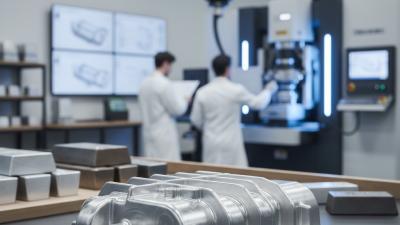
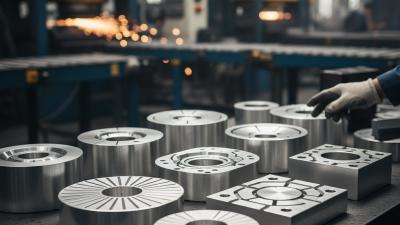
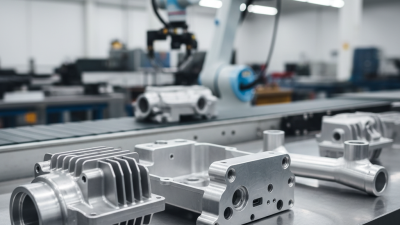
Choosing the right manufacturing process affects cost, performance, and production stability. Die Casting Aluminum Parts offers a practical solution for products requiring strength, repeatability, and attractive surface quality. Molten aluminum fills a steel mold under controlled pressure, forming detailed shapes within seconds. This process can create thin walls, mounting bosses, ribs, and integrated housings with fewer separate components. It also reduces machining work, which may lower material waste and assembly time. In a busy factory, those savings matter.
The strongest results come from experienced design and manufacturing teams. Engineers review wall thickness, draft angles, cooling paths, and likely shrinkage before tooling begins. A small housing may leave the mold with clean bolt holes and consistent edges, but only when its design matches the process. Material selection also deserves careful attention. Alloy specifications, verified supplier records, and dimensional inspection help establish dependable production quality. X-ray testing or other suitable checks can reveal internal porosity when product performance requires additional confidence.
Aluminum casting is not magic. A promising design can still fail through trapped air, poor filling, or uncontrolled temperatures. That reality makes trial runs, process monitoring, and honest review essential. Manufacturers should compare cycle time, tooling expense, mechanical requirements, and expected production volume before deciding. The cheapest quotation may not deliver the lowest long-term cost. With documented controls and practical engineering judgment, Die Casting Aluminum Parts can support durable, efficient, and scalable products across automotive, electronics, industrial equipment, and consumer applications. The process remains powerful, though not perfect.
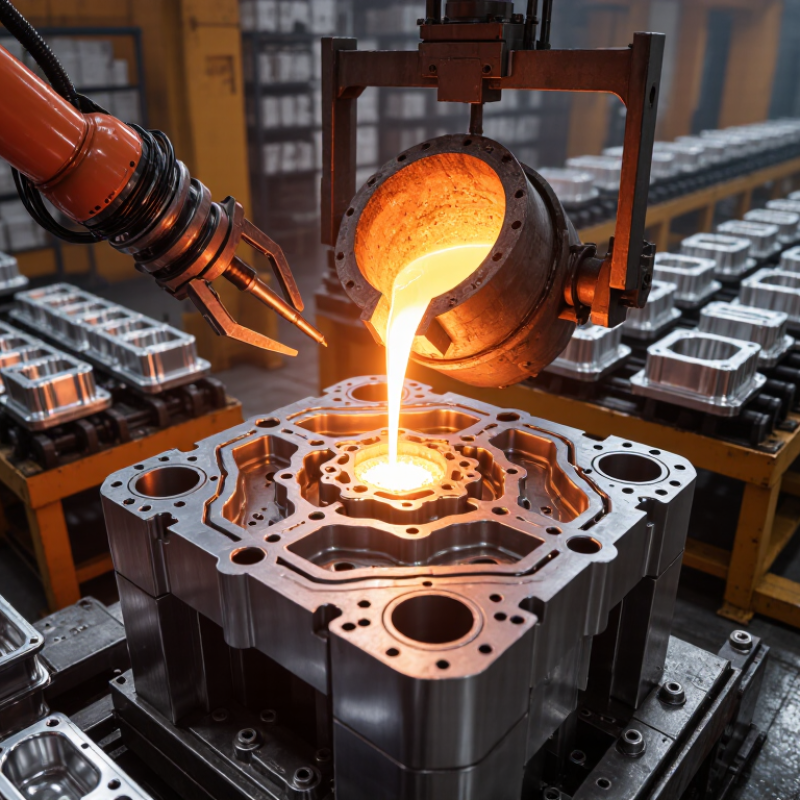
Aluminum die casting uses pressure to form molten aluminum inside a reusable steel mold. The process begins when aluminum alloy is heated until it becomes liquid. A machine then injects the metal into the closed die at high speed. Pressure helps fill thin ribs, mounting bosses, and detailed surfaces before the metal cools. After solidification, ejector pins release the part. Trimming removes gates and excess flash. Operators then inspect dimensions, surface quality, and possible internal porosity.
This method supports repeatable production and lighter components. Aluminum also offers useful corrosion resistance and heat transfer. It suits housings, brackets, motor components, and other parts with complex shapes. However, die casting is not automatically flawless. Trapped air, uneven cooling, or poor die design can create weak areas. The tooling cost may also be difficult to justify for small quantities. Engineers should review alloy selection, wall thickness, draft angles, and expected loads before production begins.
Tips: Keep walls as uniform as possible. Add gentle curves instead of sharp internal corners. Plan machining areas early, especially around holes and sealing faces. Request a filling simulation when the geometry is complicated. A sample inspection can reveal problems that drawings cannot. That step is worth the time.
| Category | Manufacturing Dimension | Typical Value or Range | Why It Matters |
|---|---|---|---|
| Material and Performance Characteristics | |||
| Aluminum density | Material weight | Approximately 2.65–2.75 g/cm³ | Provides substantially lower weight than many ferrous alloys while maintaining useful structural strength. |
| Tensile strength | Typical as-cast range | Approximately 250–350 MPa | Supports housings, brackets, covers, heat sinks, and other components subject to moderate mechanical loads. |
| Thermal conductivity | Heat transfer capability | Approximately 90–170 W/m·K | Makes aluminum suitable for heat sinks, motor housings, LED components, and electronic enclosures. |
| Melting temperature | Aluminum alloy processing range | Approximately 570–650°C | Allows the alloy to be melted and injected into a steel die for rapid, repeatable production. |
| Corrosion resistance | Service environment | Good in many atmospheric conditions | Aluminum naturally forms a thin oxide layer that helps protect the underlying material. |
| Recyclability | End-of-life material recovery | Highly recyclable | Scrap and end-of-life aluminum can be recovered and reused, supporting material-efficiency goals. |
| Typical Die-Casting Design and Production Capabilities | |||
| Common wall thickness | Part design capability | Approximately 1.5–3.0 mm | Thin walls reduce weight and material usage; local thick sections may require ribs, fillets, or cooling features. |
| Dimensional repeatability | As-cast production tolerance | Often about ±0.05–0.15 mm per 25 mm | Actual capability depends on part size, geometry, die condition, alloy, and inspection requirements. |
| Draft angle | Part removal from the die | Typically 0.5–2° per side | Draft helps the solidified casting release from the die without damaging vertical surfaces. |
| Surface finish | As-cast appearance | Approximately Ra 1.6–6.3 µm | Die casting can provide a relatively smooth surface that may require limited finishing before coating or assembly. |
| Part size range | Component scale | From small housings to parts above 1 m in length | Available machine capacity and die design determine the practical maximum size and projected area. |
| Production volume | Best-fit quantity | Medium to very high volume | Tooling costs are best justified when the same geometry is produced repeatedly over a substantial production run. |
| How the Aluminum Die-Casting Process Works | |||
| 1. Die preparation | Tool setup | Clean, lubricate, and preheat die | Proper die preparation reduces sticking, improves filling, controls thermal shock, and extends tool life. |
| 2. Alloy melting | Molten metal preparation | Approximately 650–730°C metal temperature | The selected temperature must provide adequate fluidity while limiting oxidation, gas pickup, and thermal damage. |
| 3. Die filling | Injection operation | High-speed filling in milliseconds | Rapid injection fills thin sections and complex cavities before the aluminum freezes. |
| 4. Intensification pressure | Solidification control | Commonly 50–150 MPa | Pressure helps reduce shrinkage-related voids and improves replication of die details. |
| 5. Cooling and solidification | Heat removal | Usually several seconds per shot | Controlled cooling determines cycle time, dimensional stability, surface quality, and casting integrity. |
| 6. Die opening and ejection | Part removal | Automated or semi-automated | Ejector pins, slides, and automation remove the casting while minimizing distortion and damage. |
| 7. Trimming and finishing | Post-casting operations | Flash removal, deburring, machining, or coating | Secondary operations remove runners and flash and can add threads, precision holes, protective coatings, or decorative finishes. |
| Common Aluminum Die-Casting Alloy Options | |||
| Aluminum-silicon-copper alloy | General-purpose die casting | Good fluidity and machinability | Often selected for housings, brackets, covers, and automotive or industrial components requiring balanced properties. |
| Aluminum-silicon alloy | Corrosion-sensitive applications | Good corrosion resistance and ductility | Suitable when reduced copper content and improved corrosion performance are more important than maximum strength. |
| Aluminum-magnesium alloy | Higher corrosion resistance | Good strength-to-weight potential | Useful for components exposed to demanding environments, although process control and die design are especially important. |
| Key Manufacturing Advantages | |||
| Cycle efficiency | Repeated production | Short cycle times are possible | High-speed filling and automated ejection support consistent output for large production quantities. |
| Functional integration | Part consolidation | Ribs, bosses, fins, and mounting features in one casting | Integrating features can reduce assembly steps, fasteners, part count, and total manufacturing complexity. |
| Weight reduction | Lightweight design | Thin-wall and ribbed structures | Aluminum die casting can reduce mass while preserving stiffness through engineered geometry. |
| Tooling investment | Economic consideration | Higher initial die cost | The process becomes more economical as production volume increases and tooling cost is distributed across more parts. |