Leave Your Message

10 Tips for Sourcing Metal Parts Online?

Buying Metal Parts online is no longer limited to comparing prices and downloading CAD files. Manufacturers now expect faster quotations, clearer traceability, and dependable quality across borders. McKinsey’s 2024 B2B Pulse survey reports that buyers regularly use ten or more interaction channels during purchasing decisions. An online supplier must therefore provide more than a polished website. It should offer responsive engineering support, transparent lead times, and verifiable production evidence.

Details decide. A practical sourcing review should examine material grades, dimensional tolerances, surface finishes, tooling charges, inspection methods, and packaging conditions. Deloitte’s 2023 Smart Manufacturing and Operations Survey found that 86% of manufacturing leaders view smart manufacturing as important for competitiveness. That finding reflects a wider shift toward digital supplier evaluation and connected production data. However, digital visibility does not automatically prove manufacturing capability. A perfect product page can still hide weak process control.

Trust takes evidence. Buyers should request current certifications, sample reports, material certificates, and photographs of relevant equipment. ISO 9001 registration can indicate a structured quality system, but it does not guarantee every batch will meet requirements. That distinction is easy to overlook. In practice, a small pilot order may reveal more than a long sales presentation. This guide presents ten practical tips for sourcing Metal Parts online, from checking supplier expertise to confirming inspection standards, communication habits, and delivery reliability. Some recommendations may seem obvious, yet rushed sourcing decisions often fail through small omissions: one unclear tolerance, one missing coating specification, or one unverified shipping assumption.
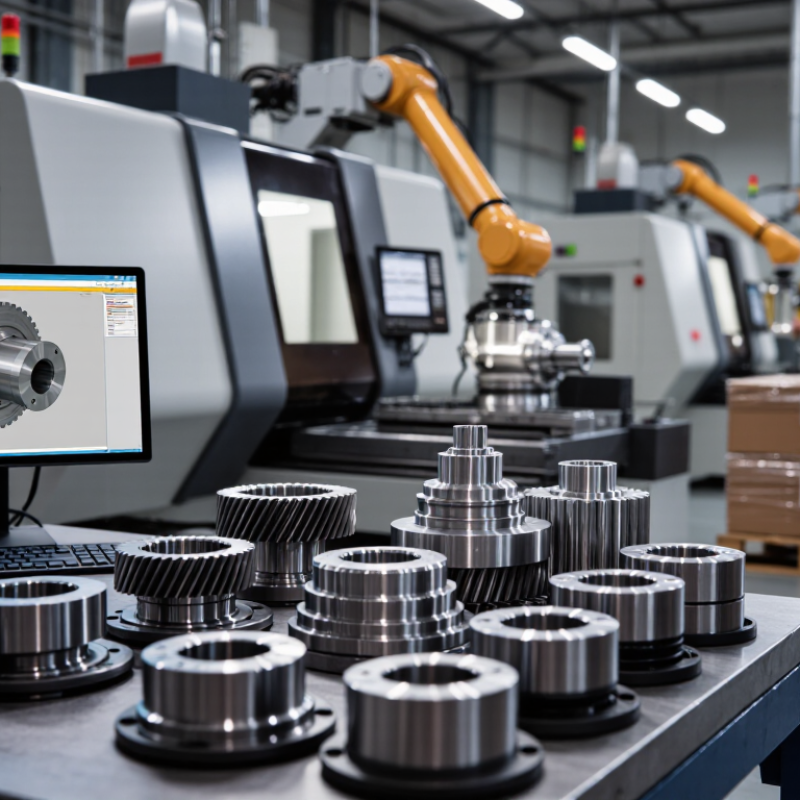
10 Tips for Sourcing Metal Parts Online?

Define Part Requirements and Technical Specifications

Before requesting quotes for metal parts online, define the part as if a machinist will build it without asking questions. State the material grade, raw thickness, finished dimensions, and allowable tolerances. Include hole diameters, thread standards, bend angles, and critical datums. A small drawing can prevent a costly misunderstanding. Add the intended load, operating temperature, and contact conditions when they affect performance. “Stainless steel” is not enough. Different grades behave differently during machining and forming.

Tip: Prepare a one-page specification sheet. List material, process, quantity, surface finish, and inspection requirements in separate lines. Specify units clearly. Mixing millimeters and inches can create avoidable errors. Mention whether dimensions apply before or after coating. Also identify cosmetic areas, because a visible scratch may matter more than a hidden tool mark.

Tip: Mark critical dimensions on the drawing. For example, a 12.00 mm bore with a ±0.02 mm tolerance needs different equipment from a general 12 mm opening. Request a dimensional inspection report for these features. If the part uses threads, state the thread size, pitch, depth, and fit class. Include acceptable burr limits. They are easy to overlook.

Tip: Ask for a technical review before production. Experienced suppliers may notice thin walls, sharp internal corners, or difficult setups. Their suggestions can improve manufacturability, but do not accept changes silently. Record every revision and confirm the final file version. My own weak point is assuming a familiar part needs less detail. It does not. Even a simple bracket can fail when one tolerance remains undefined.

Identify Qualified Online Metal Part Suppliers

Finding qualified online metal part suppliers requires more than comparing prices. Start with a clear drawing, material grade, surface finish, and tolerance range. Suppliers should explain their capabilities in plain language. Ask whether they handle milling, turning, stamping, welding, or sheet fabrication in-house.

Request recent inspection reports and material certificates for similar parts. Check whether measurements include critical dimensions, thread depth, flatness, and coating thickness. A reliable supplier should describe its inspection equipment and sampling process. Photos of packed parts can also reveal practical details, such as edge protection and moisture control. Short replies are warning signs.

Do not trust a polished website alone. Review the supplier’s manufacturing history, production capacity, and response to technical questions. Ask for a small sample before approving a large order. Compare the sample against your drawing, not against a sales promise. Confirm lead times, packaging, revision control, and how defects are handled. In practice, communication often exposes weaknesses earlier than price does.

I once treated a low quotation as proof of efficiency. It was not. The supplier had misunderstood a tolerance, and the correction delayed testing. Now, I ask suppliers to repeat key requirements in writing. No supplier is perfect. Even qualified teams need clear feedback, realistic deadlines, and documented approval. A careful qualification process reduces expensive surprises without assuming every online claim is accurate.

Compare Materials, Manufacturing Methods, and Capabilities

A reliable online quote begins with the material, not the lowest price. Compare aluminum for low weight, stainless steel for corrosion resistance, and carbon steel for cost-effective strength. A 6061 aluminum bracket may suit a light enclosure, while 304 stainless steel fits a damp production area. Check the grade, temper, hardness, and available stock before approving a drawing. Material substitutions can change machining time and final performance.

Manufacturing methods must match geometry and quantity. CNC machining works well for accurate prototypes and small batches. Sheet metal fabrication suits panels, bends, and folded brackets. Casting can reduce unit costs for complex shapes at higher volumes. Forging offers strong grain structure, but tooling costs need careful review. Ask suppliers about machine travel, minimum wall thickness, thread depth, tolerances, and surface finishes. Capability claims are useful, but measured inspection reports are stronger evidence.

Online sourcing still requires practical verification. Request a first-article sample, dimensional data, and photographs of critical features. Confirm whether inspection uses calibrated equipment. Clarify packaging, lead time, revision control, and shipping responsibilities. A low quote can hide setup fees or excessive finishing costs. I once treated a broad tolerance as harmless; assembly exposed the mistake. That experience changed my process. I now mark functional dimensions clearly and question every unexplained assumption. Share the application, expected load, environment, annual volume, and failure risks. Better information usually produces a more dependable comparison.

Evaluate Pricing, Quality Controls, and Delivery Terms

When sourcing metal parts online, evaluate landed cost, not the displayed unit price. Ask for material grade, alloy surcharge, tooling, inspection, packaging, freight, taxes, and payment fees. The World Bank’s October 2024 Commodity Markets Outlook projected global commodity prices to decline 5% in 2025, but metal prices still move unevenly. Request a quote validity period and a price-adjustment formula. Compare at least three suppliers using identical drawings and annual volumes. Cheap is not cheap. Check minimum order quantities, sample charges, and design-change costs.

Quality controls deserve evidence, not polished promises. Request a control plan, process flow, calibration records, traceability methods, and recent inspection reports. ISO’s 2022 Survey recorded more than 1.2 million ISO 9001 certificates worldwide. Certification helps, but it does not guarantee part accuracy. Define tolerances, surface finish, hardness, sampling levels, and acceptance criteria before ordering. Ask who performs final inspection and whether an independent laboratory can verify critical dimensions. A first-article sample can reveal burrs, warped edges, or incorrect plating. Production lots still need inspection.

Delivery terms should show responsibility at every handoff. Confirm production lead time, shipping mode, export documents, damage procedures, and the exact delivery point. UNCTAD’s Review of Maritime Transport 2023 notes that over 80% of global merchandise trade by volume moves by sea. Port delays can quickly erase a low quote. Request milestone updates and a buffer for customs or rework. Put late-delivery remedies and partial-shipment rules in writing. Do not accept “fast shipping” as a schedule. Test communication before placing a large order. Even experienced buyers can overlook packaging details.

10 Tips for Sourcing Metal Parts Online? - Evaluate Pricing, Quality Controls, and Delivery Terms
Tip Evaluation Area Practical Data or Benchmark What to Verify Online Warning Sign Priority
1Define the specification completely Drawings, materials, dimensions, and finishes Include material grade, dimensions, tolerances, surface finish, heat treatment, quantity, revision level, and applicable standards before requesting prices. Confirm that the supplier has acknowledged every drawing note and can work with the required file formats. Quotes are issued from a sketch or incomplete description without written assumptions. High
2Compare at least three comparable quotations Pricing transparency Request a minimum of three offers using the same revision, quantity break, material, finish, packaging, and delivery term. Compare unit price, tooling or setup charges, inspection fees, packaging, taxes, freight, and payment terms separately. The lowest price excludes tooling, inspection, freight, or other required costs. High
3Check the cost structure, not only the unit price Total landed cost Evaluate the complete cost: part price + tooling amortization + inspection + packaging + transport + duties or taxes + possible rework. Ask whether material surcharges, minimum order quantities, and changes in raw-material prices are fixed or adjustable. Prices are unusually low but lack a validity period or a breakdown of included services. High
4Validate material traceability Raw-material quality control For critical parts, require heat or batch identification and a material certificate showing grade, chemical composition, and mechanical properties. Confirm that certificates match the supplied batch and can be linked to the part or production lot. Certificates are generic, undated, incomplete, or unrelated to the production batch. High
5Review the inspection plan Dimensional and functional controls An inspection plan should identify critical dimensions, measurement methods, sampling frequency, acceptance limits, and responsible personnel. Ask for sample inspection reports, gauge lists, calibration records, and first-article inspection capability where applicable. The supplier promises “100% inspection” without defining equipment, measurements, or acceptance criteria. High
6Assess process capability Manufacturing consistency For critical characteristics, request process data such as control charts or capability results. A commonly used screening target is Cpk ≥ 1.33, when statistically appropriate. Verify the sample size, measurement system, process conditions, and whether the data represents regular production. Capability figures are provided without sample size, time period, or identification of the controlled feature. Medium
7Confirm surface treatment and finishing controls Coating, plating, deburring, and corrosion protection Specify coating type, thickness range, appearance requirements, adhesion, corrosion-resistance test method, and areas that must remain untreated. Request test reports, coating-thickness readings, sample photographs, and details of subcontracted finishing processes. “Standard finish” is used without a measurable thickness, appearance requirement, or test method. High
8Evaluate production and delivery capacity Lead time and capacity Separate tooling time, sample time, production time, inspection time, and transit time. For many standard metal parts, production lead times commonly range from about 2–8 weeks, depending on process and volume. Confirm monthly capacity, current workload, planned production date, shipping point, and the definition of “ready to ship.” A short lead time is promised without capacity evidence, production milestones, or a shipping plan. High
9Write clear delivery and logistics terms Delivery responsibility and risk State the delivery term, named location, packaging standard, documentation requirements, shipment method, insurance responsibility, and partial-shipment rules. Confirm who is responsible for export documents, freight booking, customs information, damage claims, and delivery delays. “Shipping included” is stated without a named delivery location or allocation of risk and responsibility. High
10Use samples and acceptance criteria before mass production Approval and corrective action Approve a representative sample or first article against the latest drawing before releasing full production. Define nonconformance handling, replacement, rework, credit, and response times. Include approval records, change-control rules, packaging approval, and a documented corrective-action process in the purchase agreement. Full production begins before sample approval, or quality disputes are handled only through informal messages. High
Note: Lead-time ranges and capability targets are general purchasing benchmarks rather than guarantees. Actual results depend on material availability, part complexity, production volume, finishing requirements, inspection scope, and transport conditions. All commercial and technical requirements should be confirmed in the final quotation and purchase agreement.

Verify Samples, Certifications, and Long-Term Supplier Support

10 Tips for Sourcing Metal Parts Online?

Online sourcing can save time, but polished photos prove very little. I have learned to request physical samples before approving production. Check edge quality, hole positions, surface finish, and actual dimensions with calipers. A sample reveals problems that drawings may hide. Keep one approved sample for future comparisons. Do not skip this step.

Ask suppliers for current certifications and traceable material documents. An ISO 9001 certificate may show process discipline, but it does not guarantee every part is correct. Request inspection reports, alloy details, coating specifications, and batch numbers. Confirm the certificate issuer and expiration date. Small details matter. When possible, arrange an independent inspection before shipment. It costs money, yet reworking a full shipment costs more.

Supplier support should continue after delivery. Discuss response times, replacement policies, engineering communication, and corrective actions before placing an order. Ask how they handle a failed dimensional check or a delayed material batch. Their answers often reveal more than their website. Keep written records of drawings, revisions, tolerances, and approvals. I once assumed a supplier understood a finish requirement because it seemed obvious. It was not. That mistake taught me to define appearance with photos, samples, and measurable standards. No supplier is perfect, and neither is every purchasing process. Review performance after each order, including quality, communication, packaging, and consistency.