Why Invest in Metal Casting Equipment for Your Manufacturing Business
Investing in Metal Casting Equipment is a crucial strategy for manufacturing businesses seeking to enhance productivity and competitiveness in today's dynamic market. The global metal casting market, valued at approximately USD 165 billion in 2021, is expected to grow significantly, driven by increasing demand across various industries such as automotive, aerospace, and construction. According to a recent report by Grand View Research, the automotive segment alone accounts for over 40% of the market share, highlighting the critical role that advanced metal casting techniques play in meeting industry demands.
To capitalize on this expanding market, manufacturing companies are increasingly prioritizing the acquisition of state-of-the-art Metal Casting Equipment. This investment not only supports the production of high-quality, intricate components but also enhances operational efficiencies and reduces waste. For instance, adopting technologies like 3D printing in metal casting has demonstrated potential cost savings of up to 20% while significantly shortening lead times. As the industry continues to evolve, businesses that invest in efficient and innovative casting solutions will not only improve their production capabilities but also strengthen their market position amidst fierce competition.
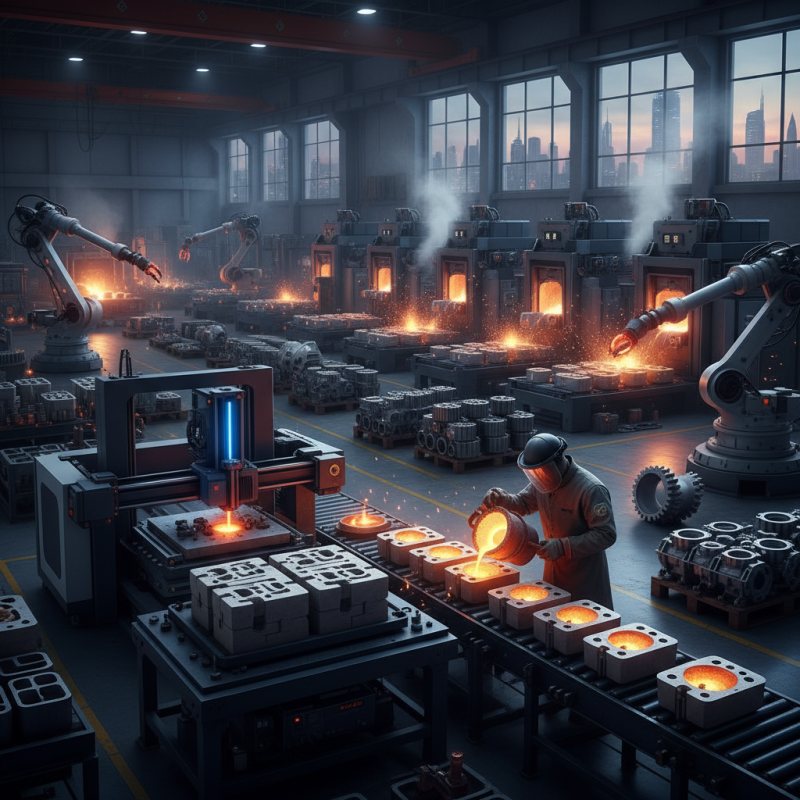
Benefits of Metal Casting Equipment in Manufacturing Efficiency
Investing in metal casting equipment can significantly enhance manufacturing efficiency, leading to improved productivity and reduced operational costs. According to a recent report by the Metal Casting Industry, companies that have upgraded to modern casting technologies have seen productivity increases of up to 30%. This is largely due to advancements in automation and precision in the casting process, which minimize errors and material waste. With state-of-the-art equipment, manufacturers can achieve higher throughput and better quality products, which directly impacts their bottom line.
Moreover, the adoption of metal casting equipment contributes to sustainability within the manufacturing sector. The latest findings from the American Foundry Society indicate that optimized casting processes can reduce energy consumption by approximately 25% compared to older methods. This not only lowers operational costs but also helps companies meet environmental regulations and consumer demand for greener products. Enhanced metal casting technologies facilitate the recycling of materials, further enhancing resource efficiency and promoting a circular economy within the industry.
Key Types of Metal Casting Equipment for Diverse Manufacturing Needs
When considering the diverse manufacturing needs of a business, investing in the right metal casting equipment becomes essential for ensuring efficiency and versatility. One key type of equipment is the industrial furnace, which plays a pivotal role in melting metals to achieve optimal casting conditions. Various furnaces, such as induction and crucible types, cater to different alloys and capacities, allowing manufacturers to choose based on their specific production requirements.
Another vital component of metal casting is the molding equipment, which shapes the liquid metal as it cools down. Options like sand molds, permanent molds, and lost-wax processes enable manufacturers to produce intricate designs with high levels of precision. By selecting the appropriate molding technique, businesses can achieve superior surface finishes and dimensional accuracy in their casted parts.
Finally, machining and finishing equipment is crucial for refining the final products. Lathes, mills, and grinders are often utilized to enhance tolerances, provide additional features, and prepare the components for assembly. With the right combination of metal casting equipment, manufacturers can not only improve their production capabilities but also adapt to the evolving demands of their markets.
Initial Investment vs. Long-Term Savings in Metal Casting Technology
Investing in metal casting equipment can seem daunting at first due to the substantial initial costs associated with acquiring high-quality machinery. However, savvy manufacturers recognize that these upfront expenses are not simply a financial drain but rather an investment in the efficiency and productivity of their operations. The right metal casting technology can streamline the production process, reduce waste, and improve the quality of the finished products. Over time, these efficiencies can translate into significant savings, offsetting the initial capital outlay.
Long-term savings become particularly evident when considering factors such as reduced labor costs and lower energy consumption. Advanced metal casting equipment often incorporates automation and sophisticated technology that minimizes manual intervention, thereby lowering the labor required for production. Additionally, improved precision in casting reduces the likelihood of defects, leading to fewer reworks and scrapped materials. By carefully evaluating the long-term benefits against the initial investment, manufacturers can make informed decisions that enhance their operational capabilities and drive profitability in the competitive manufacturing landscape.
Why Invest in Metal Casting Equipment for Your Manufacturing Business
Impact of Advanced Metal Casting on Product Quality and Reliability
Advanced metal casting technology plays a crucial role in enhancing product quality and reliability in manufacturing. By investing in modern casting equipment, businesses can achieve superior precision and consistency in their products. Advanced techniques, such as computer-aided design and simulation, enable manufacturers to predict potential flaws and optimize the casting process, resulting in higher quality outputs. This not only reduces waste and production costs but also improves customer satisfaction, as end products are more likely to meet rigorous standards.
Tips: Regularly calibrate and maintain metal casting equipment to ensure optimal performance. Implementing a proactive maintenance schedule can minimize downtime and enhance the lifespan of your machinery.
Moreover, advanced metal casting methods, such as investment casting and die casting, offer improved mechanical properties, which contribute to the overall robustness of the manufactured parts. This reliability becomes critical in industries that demand high-performance materials, such as aerospace and automotive. By leveraging these advanced techniques, manufacturers can produce components that withstand extreme conditions while maintaining operational efficiency.
Tips: Consider training your workforce on the latest metal casting technologies to maximize the benefits of your investment. A skilled team can make informed decisions that lead to innovative solutions and process enhancements.
Trends in Metal Casting Equipment and Their Future Implications
The metal casting industry is experiencing a transformative phase driven by technological advancements and changing market demands. One of the most prominent trends is the increasing integration of automation and robotics in metal casting processes.
These technologies not only enhance production efficiency but also improve precision and reduce wastage. As manufacturers invest in automated casting systems, they are better equipped to meet the growing need for high-quality, customized products while reducing labor costs.
Another significant trend is the shift towards sustainability and eco-friendly practices. Manufacturers are exploring the use of recycled materials and energy-efficient processes to minimize their environmental impact. The adoption of innovative casting techniques, such as 3D printing and electromagnetic casting, is also on the rise, offering new avenues for reducing material usage and emissions. As businesses adapt to these trends, they position themselves to stay competitive while contributing positively to the environment. The future of metal casting equipment will likely be defined by these advancements, shaping a more efficient and sustainable manufacturing landscape.

 +86-13516964051


 CONTACT NUMBER
 CONTACT NUMBER