 +86-13516964051


Leave Your Message
-
CONTACT NUMBER
-
 CONTACT NUMBER
 -
 CONTACT NUMBER
Choosing the right Aluminum Casting Machine is not simply a matter of comparing prices or injection speeds. The best choice depends on your alloy, part size, production volume, and required surface quality. A machine built for small automotive housings may perform poorly with larger industrial castings. Details matter. Even the workshop floor matters.
John Campbell, a respected casting researcher and author of Complete Casting Handbook, stated, “The quality of a casting is determined by the quality of the liquid metal.” His observation remains highly relevant. A reliable machine must support stable melting, accurate temperature control, consistent filling, and effective defect prevention. Look closely at shot capacity, clamping force, cycle time, vacuum capability, cooling channels, and automation compatibility. These specifications influence real production results.
Numbers can mislead.
A high injection speed does not guarantee stronger castings. An oversized machine may consume more energy and create unnecessary maintenance costs. In practical evaluations, engineers should inspect sample parts, review service records, and test the machine with the intended alloy. Supplier support also deserves serious attention. Spare-part availability, operator training, software updates, and response time can affect production more than a small purchase-price difference.
There is no perfect machine for every factory. That is an uncomfortable truth. A thoughtful selection process balances technical performance, safety, reliability, lifecycle cost, and future capacity. This guide explains how to assess each factor and avoid decisions based only on impressive brochures.
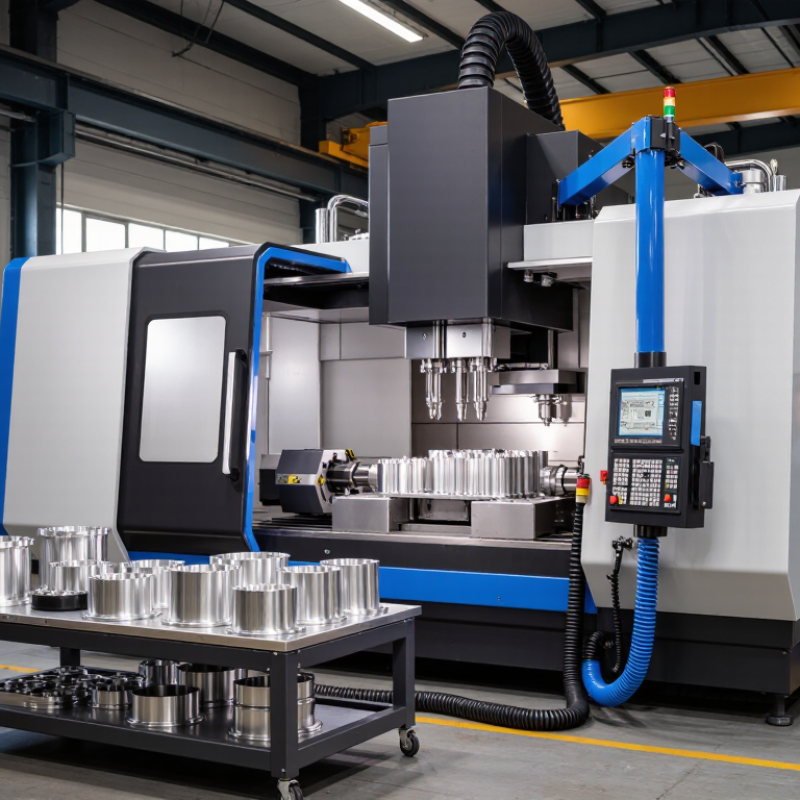
Choosing an aluminum casting machine starts with the part, not the machine catalog. Identify the alloy before comparing heating capacity. Pure aluminum melts near 660°C, but common casting alloys melt across different temperature ranges. Their silicon, magnesium, and copper content changes fluidity, shrinkage, and feeding behavior. A furnace reaching 660°C may still be unsuitable for a specific alloy. Check the alloy supplier’s recommended pouring and holding temperatures.
Wall thickness strongly affects filling performance. Thin ribs cool quickly and may create cold shuts or incomplete edges. Thick sections can trap gas and develop shrinkage cavities. Measure the thinnest wall, the heaviest section, and every narrow passage. A machine should provide stable metal flow without excessive turbulence. In practice, a small test casting often reveals problems that drawings hide. I once underestimated a thin corner; the machine had enough pressure, but the metal froze too early.
Part size also determines shot volume, mold dimensions, and clamping force. Include runners, overflows, and expected trimming waste when estimating material demand. Oversizing the machine can increase energy use and reduce control at smaller shots. Undersizing it creates unstable filling and unnecessary wear. Leave room for process adjustment. Temperature sensors, repeatable controls, and accessible maintenance points matter as much as headline capacity. Recheck the selection after reviewing trial results, because the first calculation is rarely perfect.
| Part Requirement | Typical Data or Range | Why It Matters | Recommended Machine Consideration | Selection Check |
|---|---|---|---|---|
| Alloy: commercially pure aluminum | Melting point: approximately 660°C; very high thermal conductivity; relatively low casting strength compared with common cast alloys. | The metal requires sufficient heating capacity and temperature control near its melting point. Excessive overheating can increase oxidation and hydrogen pickup. | Use a furnace with accurate temperature measurement, suitable refractory or crucible materials, and controlled holding capability. | Confirm that the rated operating temperature exceeds 660°C with an appropriate safety margin and stable control. |
| Alloy: A356 / AlSi7Mg | Typical melting range: approximately 557–613°C; commonly used for structural and automotive-type castings. | The silicon content improves fluidity, while magnesium allows heat treatment. The alloy is sensitive to melt cleanliness and hydrogen porosity. | Choose a gravity, low-pressure, or sand-casting system with degassing and filtration capability when quality requirements are high. | Check melt temperature uniformity, degassing options, mold filling control, and heat-treatment compatibility. |
| Alloy: A380 / AlSi8Cu3 | Typical melting range: approximately 538–593°C; widely used for thin-wall pressure die castings. | Good fluidity and productivity support complex shapes, but copper content reduces corrosion resistance and limits some heat-treatment applications. | For high-volume thin-wall parts, consider a pressure die-casting machine with suitable injection speed, pressure, and shot capacity. | Match the machine's injection parameters and locking force to the projected area, wall thickness, and required cycle time. |
| Alloy: AlSi12 | Typical melting range: approximately 577–582°C; high silicon content provides good fluidity and reduced shrinkage tendency. | Suitable for detailed castings and sections with variable thickness. Mold filling behavior depends strongly on pouring or injection temperature. | A gravity or pressure casting machine with controlled melt delivery and mold temperature monitoring is appropriate. | Verify the machine can maintain repeatable melt and mold temperatures throughout the production cycle. |
| Thin wall section | Approximately 1.5–3.0 mm, depending on alloy, part geometry, flow length, mold design, and casting method. | Thin walls lose heat quickly and may cause misruns, cold shuts, or incomplete filling. | Prefer pressure die casting or another process with rapid, controlled metal injection. A vacuum-assist function may improve filling and porosity performance. | Compare the required wall thickness and flow length with the machine's tested filling capability rather than relying only on nominal capacity. |
| Medium wall section | Approximately 3–6 mm for many aluminum gravity or sand-casting applications. | This range generally offers a practical balance between filling behavior, strength, cooling rate, and material usage. | Gravity die casting, low-pressure casting, or sand casting can be considered according to surface finish, tooling cost, and production volume. | Check mold preheating, pouring control, feeding design, and the required dimensional tolerance. |
| Large or thick section | Greater than approximately 6 mm; local sections may require risers, chills, or controlled solidification. | Thick areas are more vulnerable to shrinkage cavities, hot spots, and longer solidification times. | Prioritize machines and molds that support controlled filling, directional solidification, feeding, and thermal management. | Review simulation results, riser capacity, cooling layout, and the machine's holding-volume stability. |
| Small part size | Typical projected area below 200 cm² and shot weight below approximately 2 kg, depending on the part design. | Small parts require accurate dosing and repeatable, low-volume metal transfer to minimize waste and flash. | Select a machine with a suitably small shot or pouring range, precise temperature control, and short cycle capability. | Ensure the minimum shot size is compatible with the part, runner, overflow, and expected process losses. |
| Medium part size | Typical projected area of approximately 200–1,000 cm² and shot weight of approximately 2–15 kg. | Machine capacity must cover the complete metal charge, including the casting, runners, gates, overflows, and process allowance. | Choose a machine whose shot capacity and clamping or mold-handling system provide adequate reserve without excessive oversizing. | Calculate total shot weight and projected area before comparing machine ratings. |
| Large part size | Projected area above approximately 1,000 cm² or shot weight above approximately 15 kg, depending on the process. | Larger parts increase requirements for metal volume, mold support, filling balance, heat removal, and machine rigidity. | Consider low-pressure, gravity, or large pressure die-casting equipment with sufficient furnace capacity, mold space, and structural strength. | Confirm platen dimensions, tie-bar clearance, mold weight, shot capacity, locking force, and thermal management capacity. |
| Furnace temperature capability | For aluminum, a practical melting and holding range is commonly above the alloy liquidus; many systems operate roughly around 680–750°C, depending on alloy and process. | The furnace must melt the charge efficiently while avoiding unnecessary overheating, oxidation, dross formation, and hydrogen absorption. | Select electric resistance, gas-fired, or induction equipment based on batch size, energy availability, melt cleanliness requirements, and production rate. | Do not select a furnace rated only at 660°C. Allow operating margin above the melting point and verify actual temperature uniformity. |
| Metal holding capacity | Usually sized for the required shot or pour rate plus reserve for production interruptions and thermal stability. | Insufficient holding capacity causes production delays and temperature fluctuations; excessive capacity increases energy use and metal exposure time. | Choose a furnace capacity that supports the target cycle rate while maintaining stable melt temperature and minimizing residence time. | Compare hourly metal demand, batch size, replenishment frequency, and maximum permissible holding time. |
| Process and quality control | Key controls include temperature measurement, melt cleanliness, degassing, filtration, mold temperature, filling speed, and pressure profile. | Machine performance alone cannot compensate for poor melt preparation or unstable process conditions. | Prioritize closed-loop temperature control, programmable filling, data logging, and optional degassing or vacuum functions where required. | Define acceptance limits for porosity, dimensional accuracy, surface finish, tensile properties, and repeatability before purchasing. |