+86-13516964051


Global buyers are entering 2026 with higher expectations for Die Cast Car Parts. They need stable dimensions, clean surfaces, reliable alloys, and traceable production records. A supplier may look impressive online, yet its real capability appears in tooling control, sample approval, and delivery performance.
John Jorstad, a respected die-casting consultant and industry educator, has often stressed a practical principle: “A good casting starts with a good die.” That idea remains highly relevant. A precise mold reduces flash, porosity, machining waste, and repeated production delays. It also protects consistency across thousands of parts. Strong suppliers should explain their aluminum or zinc alloy grades, casting machines, inspection methods, and corrective-action procedures. Certifications matter, but they never replace production evidence.
This guide reviews leading suppliers for international automotive buyers in 2026. It considers engineering support, tooling experience, quality systems, communication, packaging, and export readiness. Factory photographs are useful. Audited records are better. Still, no ranking can remove every purchasing risk. Even experienced buyers sometimes overlook maintenance discipline or underestimate mold replacement costs. That deserves attention.
Look beyond the quotation.
Ask for dimensional reports, material certificates, capability data, and recent customer references. Examine how each supplier handles a scratched prototype, a late shipment, or a failed inspection. The best partner is not always the cheapest. It is the supplier that identifies problems early, communicates clearly, and improves when evidence proves its process is weak.
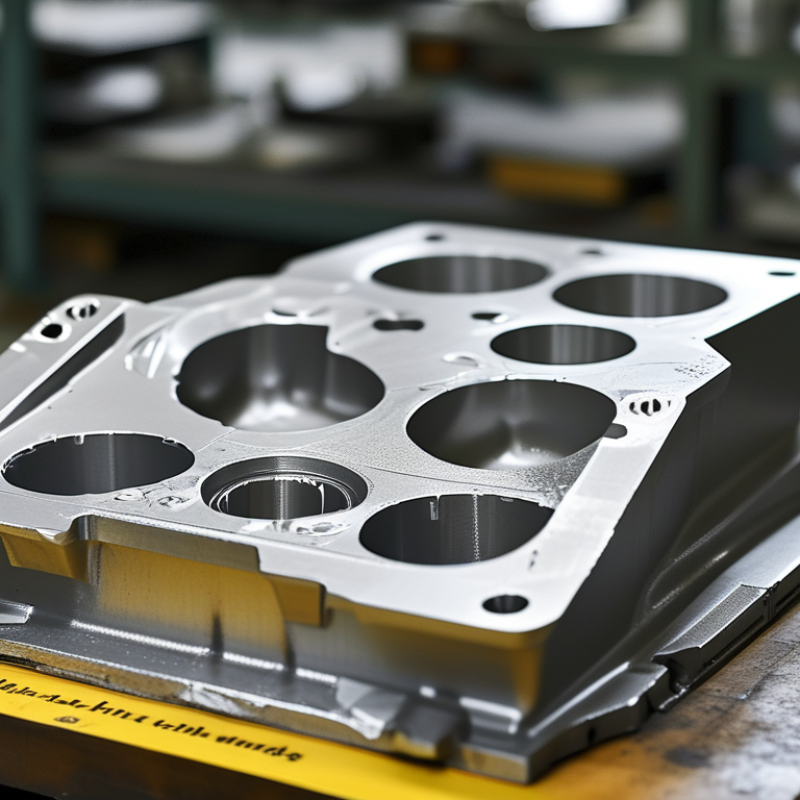
A reliable die cast car parts supplier in 2026 offers more than competitive pricing. They show how each part moves from alloy selection to final inspection. Experienced suppliers provide material certificates, batch numbers, and clear production records. These details help buyers trace a housing, bracket, or transmission cover months later.
Technical capability also matters. A dependable supplier uses controlled die temperature, stable injection pressure, and documented mold maintenance. They should share dimensional inspection reports with actual measurements, not only pass-or-fail statements. Samples must match production parts in weight, surface finish, and machining accuracy. Small differences can create costly assembly problems.
Communication reveals practical reliability. During my supplier evaluations, fast replies were useful, but honest replies mattered more. A capable team explains casting limits before promising delivery. They also report defects with photographs and corrective actions. No supplier performs perfectly every time. That is normal. The concern is whether problems are hidden or studied. One overlooked porosity area can weaken a mounting point. One late tooling change can disturb an entire schedule. Reliable suppliers use trial runs, process checks, and realistic lead times. They welcome third-party inspections and keep packaging suitable for long-distance transport. Vague answers remain a warning sign.
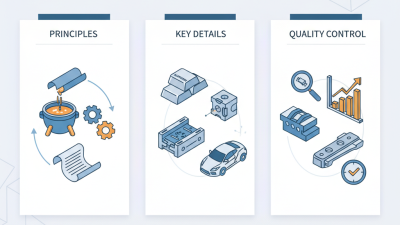
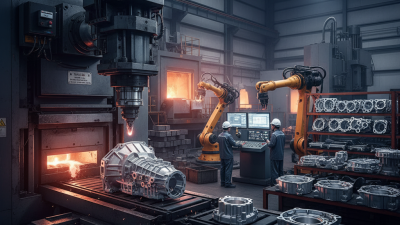
Die cast car parts begin with tooling, not molten metal. Engineers review wall thickness, ribs, draft angles, and filling paths before cutting the mold. Aluminum alloys suit lightweight housings, while zinc alloys support smaller, detailed components. The die is preheated and coated, then molten metal enters under high pressure. Accurate temperature control matters. Too cold, and the part may show incomplete filling. Too hot, and porosity or die wear can increase.
After ejection, workers trim gates and flash from the casting. Shot blasting removes loose residue and improves surface consistency. Critical areas may receive CNC machining for holes, threads, or sealing faces. Some parts also require leak testing, dimensional inspection, or X-ray checks for internal voids. These steps are practical safeguards for global buyers, especially when parts must fit assemblies from different production sites. A capable supplier should provide material certificates, process records, inspection data, and traceable samples.
Tips: Ask how the supplier controls die temperature, injection speed, and porosity. Request a dimensional report from actual production parts, not only a polished sample. Confirm coating thickness and corrosion testing when appearance matters. No process is flawless. A visually clean casting can still fail inside, while an overlooked machining tolerance may cause assembly problems. Buyers should review drawings with manufacturing engineers before approving mass production. Small design changes often reduce trimming, machining, and future rejection costs.
Supplier capability comparison based on common automotive die casting processes and typical industry performance ranges
| Manufacturing Process | Common Alloys | Typical Part Weight | Typical Dimensional Tolerance | Typical Surface Finish | Suitable Production Volume | Typical Automotive Applications | Key Supplier Capabilities to Verify |
|---|---|---|---|---|---|---|---|
| Cold-Chamber High-Pressure Die Casting | Aluminum A380 Aluminum ADC12 Aluminum EN AC-46000 | Approximately 0.05–50 kg per casting, depending on machine capacity and component geometry | Typically ±0.10–0.30 mm for controlled features; larger dimensions may require additional machining | Approximately 1.6–6.3 μm Ra after casting, depending on tooling condition and alloy | Medium to very high volumes; commonly used for automotive programs requiring repeated production | Transmission housings, motor housings, brackets, structural nodes, oil pans, and electronic enclosures | Machine locking force, shot-control system, mold-flow capability, vacuum assistance, in-house CNC machining, and process traceability |
| Vacuum-Assisted High-Pressure Die Casting | Aluminum A380 Aluminum A383 Aluminum ADC12 | Approximately 1–80 kg per casting, subject to machine size and component design | Typically ±0.10–0.25 mm for controlled dimensions; final machining is often used for critical interfaces | Approximately 1.6–6.3 μm Ra after casting | Medium to high volumes, particularly where reduced porosity and improved structural integrity are required | Battery trays, structural housings, motor cases, suspension components, and large automotive enclosures | Vacuum level monitoring, leak-rate control, filling simulation, heat-treatment capability, and documented internal-porosity inspection |
| Semi-Solid Metal Die Casting | Aluminum A356 Aluminum A357 Aluminum 6061-Based Alloys | Approximately 0.2–15 kg per component | Typically ±0.08–0.20 mm for well-controlled features | Approximately 1.6–3.2 μm Ra after casting, depending on tooling and finishing | Medium to high volumes where improved mechanical properties and reduced porosity justify higher process complexity | Suspension parts, steering components, brake components, brackets, and safety-related structural parts | Slurry or billet preparation, temperature control, rheology management, heat treatment, metallography, and mechanical-property testing |
| Hot-Chamber Zinc Die Casting | Zamak 3 Zamak 5 Zamak 7 | Approximately 0.005–5 kg per casting | Typically ±0.025–0.10 mm for small, stable features | Approximately 0.8–3.2 μm Ra after casting; suitable for decorative finishes | High to very high volumes, especially for small parts with thin walls and detailed geometry | Door handles, seat components, latches, knobs, trim supports, sensor housings, and small brackets | Thin-wall capability, automatic trimming, plating or powder-coating control, mold-life management, and dimensional inspection equipment |
| Hot-Chamber Magnesium Die Casting | Magnesium AZ91D Magnesium AM60B | Approximately 0.05–15 kg per casting | Typically ±0.10–0.25 mm for controlled dimensions | Approximately 1.6–6.3 μm Ra after casting | Medium to high volumes for lightweight components | Instrument-panel supports, steering-wheel frames, seat frames, electronic housings, and cross-car structures | Magnesium handling and fire-safety systems, melt protection, corrosion control, shot monitoring, and alloy-certification procedures |
| Low-Pressure Die Casting | Aluminum A356 Aluminum A357 Heat-Treatable Al-Si Alloys | Approximately 2–80 kg per casting, depending on component design | Typically ±0.20–0.50 mm before machining | Approximately 3.2–12.5 μm Ra after casting | Low to high volumes; particularly effective for wheel and large, sound aluminum components | Automotive wheels, suspension components, housings, and large near-net-shape parts | Controlled filling pressure, solidification monitoring, heat-treatment capability, X-ray inspection, and wheel-specific fatigue testing where applicable |
| Gravity Die Casting | Aluminum A356 Aluminum A319 Aluminum A380 | Approximately 0.1–30 kg per casting | Typically ±0.30–0.80 mm before machining | Approximately 3.2–12.5 μm Ra after casting | Low to medium volumes, prototypes, service parts, and components requiring heat treatment | Brake components, manifolds, brackets, housings, and prototype production parts | Permanent-mold design, thermal control, feeding-system design, heat treatment, and production flexibility for lower-volume programs |
| Multi-Slide Zinc Die Casting | Zamak 3 Zamak 5 | Approximately 0.001–1.5 kg per component | Typically ±0.025–0.075 mm for small precision parts | Approximately 0.8–3.2 μm Ra after casting | High to very high volumes for compact, detailed components | Seat adjusters, locking components, clips, latches, cable fittings, and precision interior hardware | Multi-slide tooling, automated part handling, flash control, plating readiness, and high-speed dimensional inspection |
| Die Casting With CNC Post-Machining | Aluminum Alloys Zinc Alloys Magnesium Alloys | Part size depends on the selected die casting process and machining-center capacity | Typically ±0.01–0.05 mm for machined critical features; achievable tolerance depends on datum design and inspection method | Approximately 0.8–3.2 μm Ra on machined surfaces; cast surfaces retain the original finish | Medium to high volumes where dimensional accuracy and assembly performance are critical | Transmission interfaces, bearing seats, sealing surfaces, threaded holes, valve bodies, and motor housings | Datum strategy, fixture design, tool-life monitoring, coolant management, CMM inspection, leak testing, and first-article approval |
| Die Casting With Vacuum Leak Testing | Aluminum Alloys Magnesium Alloys Zinc Alloys | Applicable to small, medium, and large pressure-containing castings | Dimensional tolerance follows the selected casting process; sealing features commonly require CNC finishing | Surface finish follows the casting and machining sequence | Medium to high volumes for fluid, pressure, and environmental-sealing applications | Cooling-system housings, hydraulic components, battery cooling plates, inverter housings, and electronic enclosures | Defined test pressure, allowable leakage rate, calibrated equipment, test records, traceability by lot, and corrective-action procedures |
Note: The figures shown are typical industry ranges for supplier prequalification. Actual results depend on alloy grade, casting size, wall thickness, tooling design, machine parameters, inspection standards, and post-processing requirements.
2026 Best Die Cast Car Parts Suppliers for Global Buyers
Selecting a die cast car parts supplier requires more than comparing unit prices. During factory evaluations, experienced buyers inspect filling marks, flash, ejector damage, and surface consistency on actual samples. A reliable supplier should explain alloy selection, mold-life expectations, and common porosity risks clearly. Vague answers deserve caution.
Certifications provide useful evidence, but they are not automatic proof of product quality. Check the certificate scope, issuing body, validity date, and production site address. ISO 9001 supports quality management, while IATF 16949 indicates automotive-focused processes. Environmental certification can also reveal stronger operational discipline. Request recent audit findings when possible. Few suppliers will volunteer weaknesses.
Technical capability should be verified through records, not impressive equipment lists. Ask for dimensional reports from CMM inspections, material test results, X-ray or CT evidence, and process-control charts. Review PPAP experience, traceability methods, mold maintenance logs, and corrective-action reports. A capable team should connect each measurement to a drawing requirement. Sample parts may look excellent, yet batch variation can appear after several weeks. This is where careful buyers sometimes make mistakes. A small pilot order, defined acceptance limits, and an independent pre-shipment inspection can reduce uncertainty. Keep communication written and technically specific. That protects both sides when requirements change.
2026 Best Die Cast Car Parts Suppliers for Global Buyers
Global sourcing requires more than a competitive quotation. Experienced buyers should check production capacity, export handling, and delivery records. A reliable supplier provides clear lead times, carton dimensions, pallet plans, and shipping documents. Small details matter. A missing packing list can delay a container at the port. Request commercial invoices, certificates of origin, and accurate HS classifications before shipment. Confirm Incoterms in writing, because unclear responsibilities often create unexpected costs.
Compliance needs practical verification. Ask for material declarations, surface-treatment details, and product inspection reports. The supplier should explain how samples match mass production. For die cast parts, inspect weight, dimensions, threads, paint adhesion, and protective packaging. Photos help, but they are not enough. An independent pre-shipment inspection may be worthwhile for large orders. Requirements can vary by destination, and assumptions sometimes fail.
Tips: Keep one approved sample with your purchasing records. Use a checklist for documents, tolerances, labeling, and delivery dates. Also, test the supplier’s after-sales response before placing a major order. A dependable team should answer defect claims promptly, identify affected batches, and suggest practical remedies. Useful support may include replacement parts, repair guidance, credit arrangements, or shared inspection costs. I have seen buyers focus heavily on unit price and overlook response time. That decision can become expensive. No supplier handles every issue perfectly, so written procedures and honest communication remain essential.
Global Sourcing Factors: Logistics, Compliance, and After-Sales Support
This suggested supplier evaluation model assigns a total score of 100 points across the factors most relevant to international purchasing. On-time delivery and compliance documentation receive the highest weight because they directly affect production continuity, customs clearance, and regulatory risk. Quality consistency, landed-cost transparency, and after-sales support complete the evaluation.